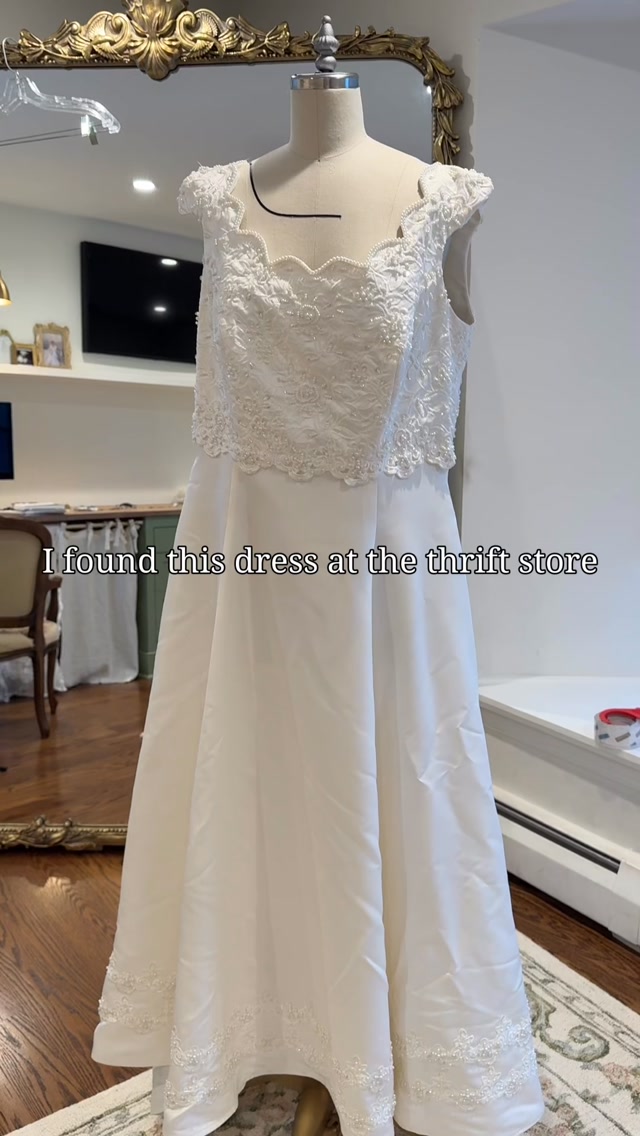
Cathedral-ready wedding dresses
A practical guide to Catholic cathedral wedding dresses, from ceremony coverage and sleeves to trains, veils, fabrics, movement, and custom design.
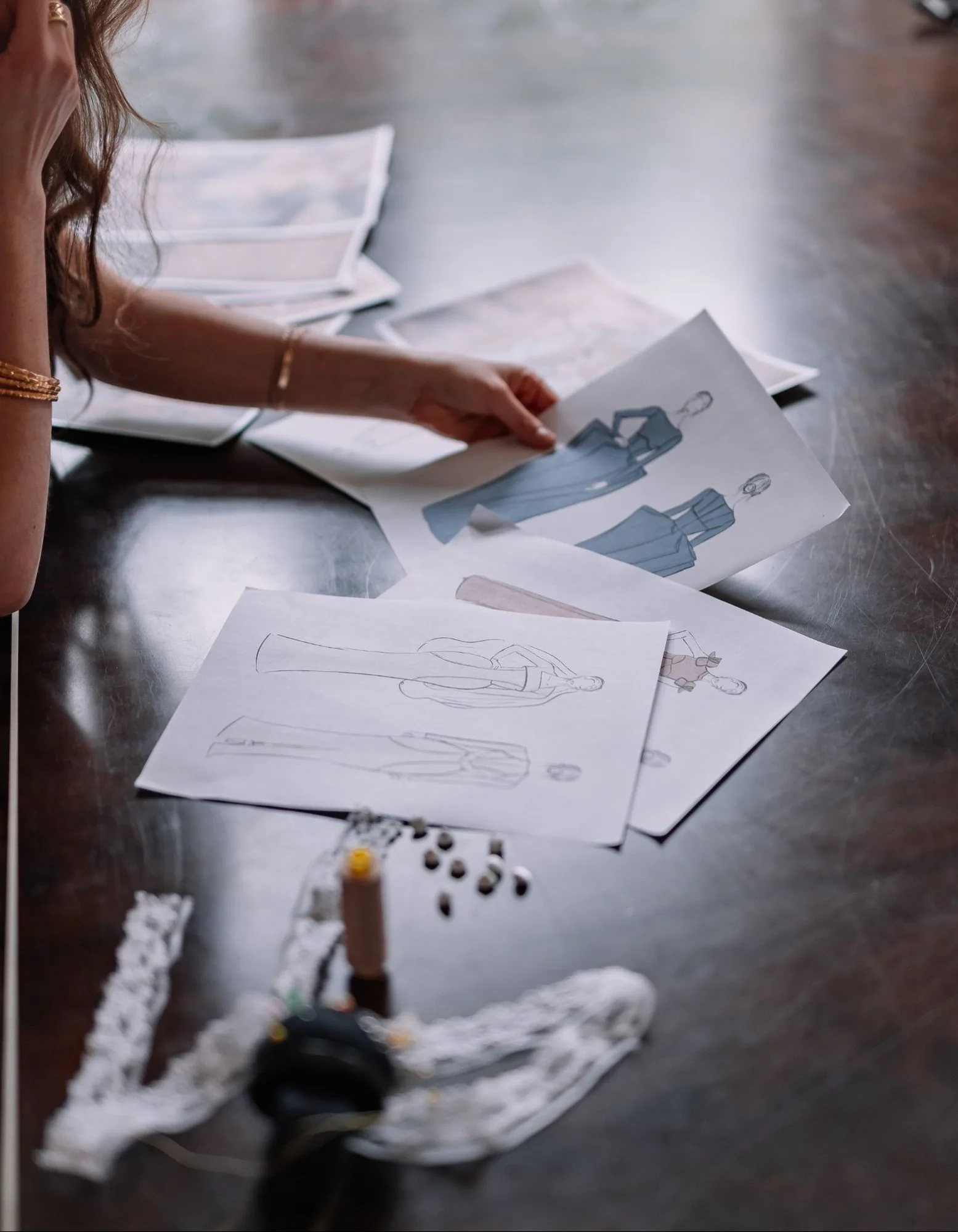
If you are getting married in a Catholic cathedral, your dress has to do more than look beautiful in a fitting room. It needs to honor the ceremony, meet the rules of the church, move well through a long aisle, photograph with scale, and still feel like you.
That is what "cathedral-ready" means. It is not one exact dress code. It is a way of designing the gown so the bride, the liturgy, and the space all make sense together.
For some brides, that means a long-sleeve lace ballgown with a cathedral veil. For others, it may be a clean crepe column dress with a bateau neckline, a detachable cape, and a dramatic but manageable train. The point is not to look old-fashioned. The point is to look reverent, secure, formal, and completely considered.
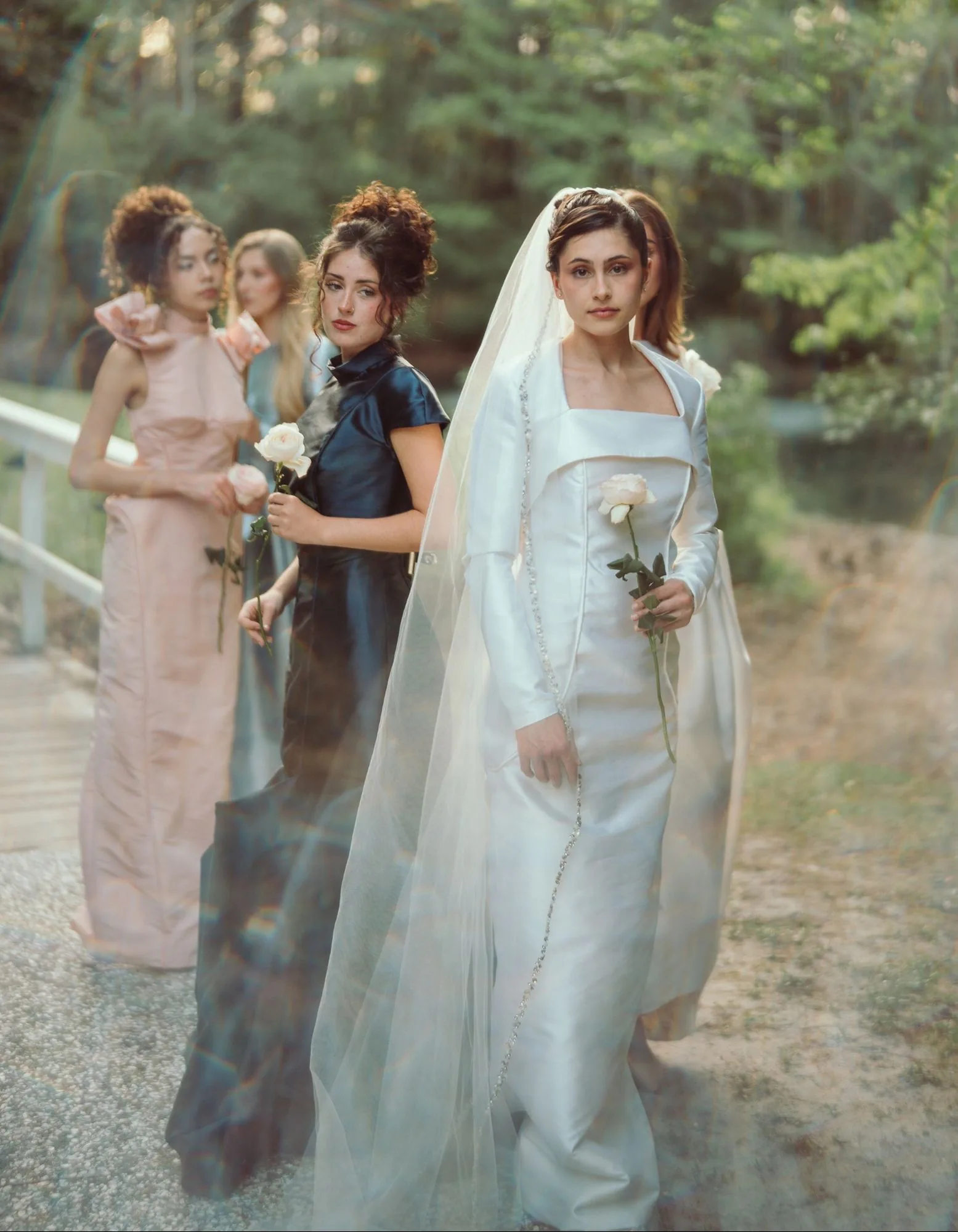
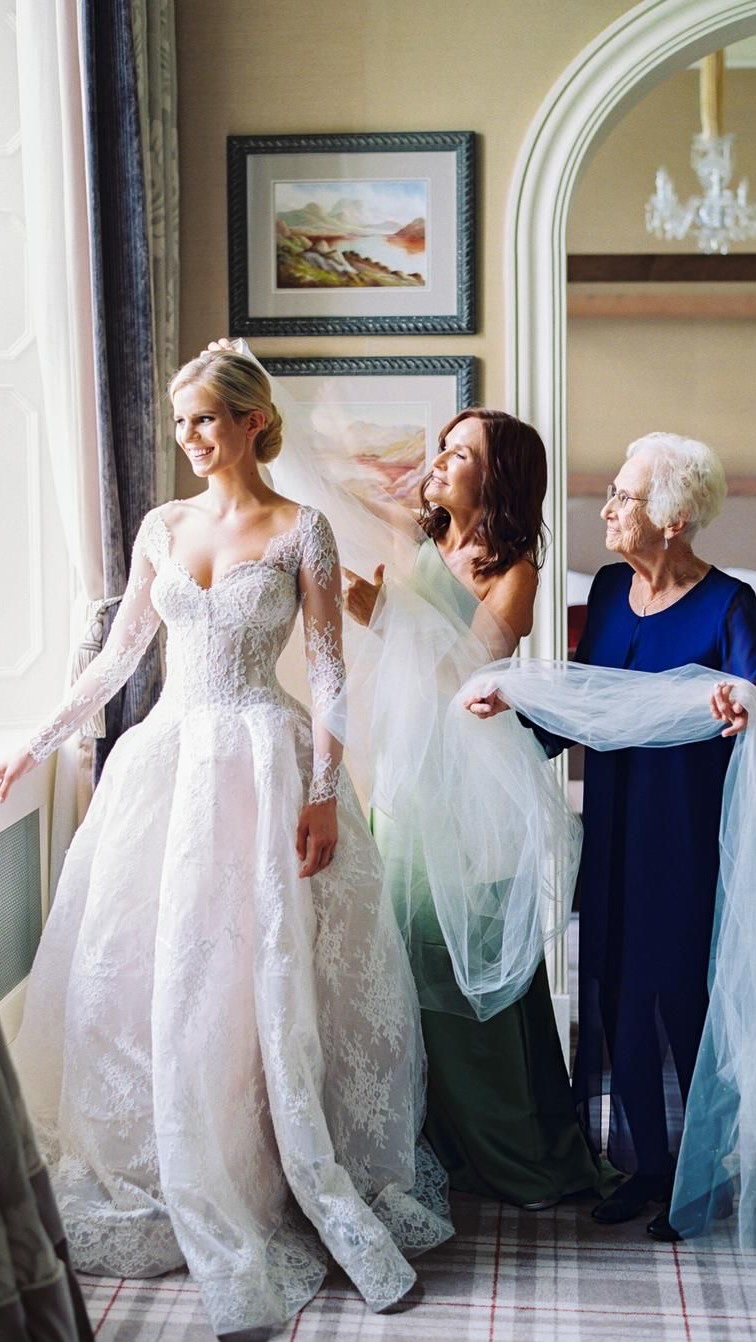
A cathedral-ready dress should feel beautiful in motion, not only while standing still. Image: Samantha Covey.
Start with the church, not the dress
Before you shop, ask your priest, parish office, or cathedral coordinator for the wedding guidelines. This matters because Catholic wedding rules are not identical everywhere.
The USCCB marriage preparation guidance tells couples to contact their parish priest six to nine months before the wedding. That is not only for paperwork. It gives you time to understand the ceremony, the music, the readings, the photography rules, and any expectations around dress.
Cathedral guidelines can be very specific. The Cathedral Basilica of Saints Peter and Paul in Philadelphia asks engaged couples to read the guidelines before requesting a meeting and requires at least six months of preparation. The Cathedral Basilica of St. Louis is even more explicit about attire: strapless gowns are not allowed for the bride or attendants during the ceremony unless a jacket, shawl, or other shoulder covering is worn.
That does not mean every Catholic cathedral has the same rule. It does mean you should not guess. A dress that works for a ballroom may need changes for a Nuptial Mass or a formal Catholic ceremony.
Ask these questions early:
- Are shoulders required to be covered?
- Are strapless gowns allowed with a jacket, shawl, cape, bolero, or veil?
- Are illusion sleeves or illusion necklines acceptable, or should lace be lined?
- Are plunging necklines, low backs, sheer panels, or high slits discouraged?
- Are there rules for bridesmaids and mothers as well as the bride?
- How wide and long is the aisle?
- Who can help arrange the train and veil before the processional?
- What photography rules will affect portraits of the gown inside the church?
This is also where a custom designer can save you stress. If you know the rules before the sketching begins, the dress can be designed around them instead of corrected later.
What makes a gown cathedral-ready
A cathedral-ready wedding dress usually has four qualities.
First, it respects the sacred setting. Catholic marriage is a sacrament, and the wedding liturgy is the center of the day. The dress should support that reality instead of fighting it.
Second, it is secure. You should be able to stand, kneel if needed, sit, process, hug family, and receive guests without worrying about the bodice shifting or the neckline opening.
Third, it has enough visual weight for the architecture. Cathedrals are large. High ceilings, stone, stained glass, marble, long aisles, and altars can make a tiny, flimsy dress feel under-scaled. This does not mean every bride needs a huge skirt. It means the gown needs presence.
Fourth, it has a plan for the reception. A cathedral train can be stunning during the ceremony and exhausting afterward. A good dress plan includes the bustle, detachable pieces, veil removal, and movement after Mass.
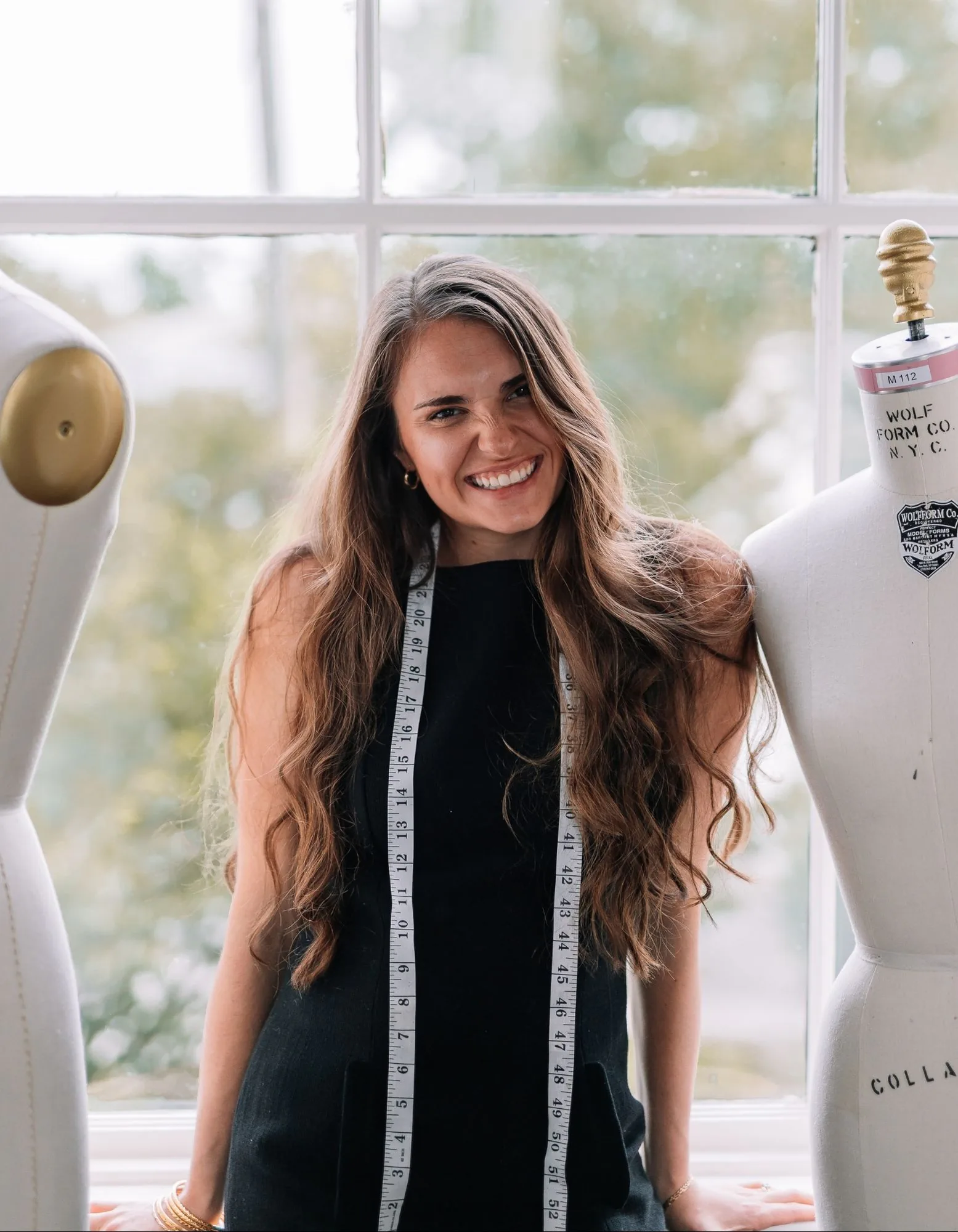
Formal ceremony dressing benefits from a designer who can balance proportion, coverage, and personal style from the beginning. Image: Samantha Covey.
Coverage that looks intentional
The mistake many brides fear is looking covered but not designed. That happens when sleeves, lining, or shoulder coverage are added to a dress that was never meant to carry them.
Coverage looks best when it starts in the design. The neckline, shoulder line, sleeve, bodice, skirt, and back should all speak the same language.
For a Catholic cathedral wedding, these details deserve careful attention.
Shoulders: Some cathedrals require covered shoulders during the ceremony. A true sleeve is the cleanest solution, but a cape, bolero, jacket, mantilla veil, or detachable topper can also work if the church allows it.
Neckline: Bateau, portrait, jewel, square, high scoop, soft V, and mock necklines can all feel elegant. The question is not simply "high or low?" It is whether the neckline feels secure and appropriate when you stand at the altar.
Back coverage: A low open back can be difficult in a more traditional cathedral setting. A higher back, keyhole back, covered buttons, lace panel, or detachable cape can give the gown refinement without making it feel plain.
Sleeves: Long sleeves are classic, but they are not the only option. Three-quarter sleeves, fitted lace sleeves, soft bishop sleeves, structured satin sleeves, cap sleeves, or detachable sleeves can all work. The sleeve should allow you to lift your arms, hold a bouquet, hug, and move naturally.
Lining and transparency: Illusion tulle and lace can be beautiful, but they need discipline. If the point is ceremony coverage, sheer fabric should not create confusion. Lined lace often reads more polished in a cathedral than lace that looks bare underneath.
Slits: A high slit can feel out of place in many Catholic ceremony settings, especially with steps, kneeling, or a long processional. If you want leg movement, a quieter front split, side godet, fuller skirt, or reception overskirt change may be better.
Strapless gowns: If you love a strapless silhouette, do not assume it is impossible. Some cathedrals allow it with a shawl, jacket, cape, or bolero during the ceremony. The key is to make that layer look like part of the dress, not a last-minute cover.
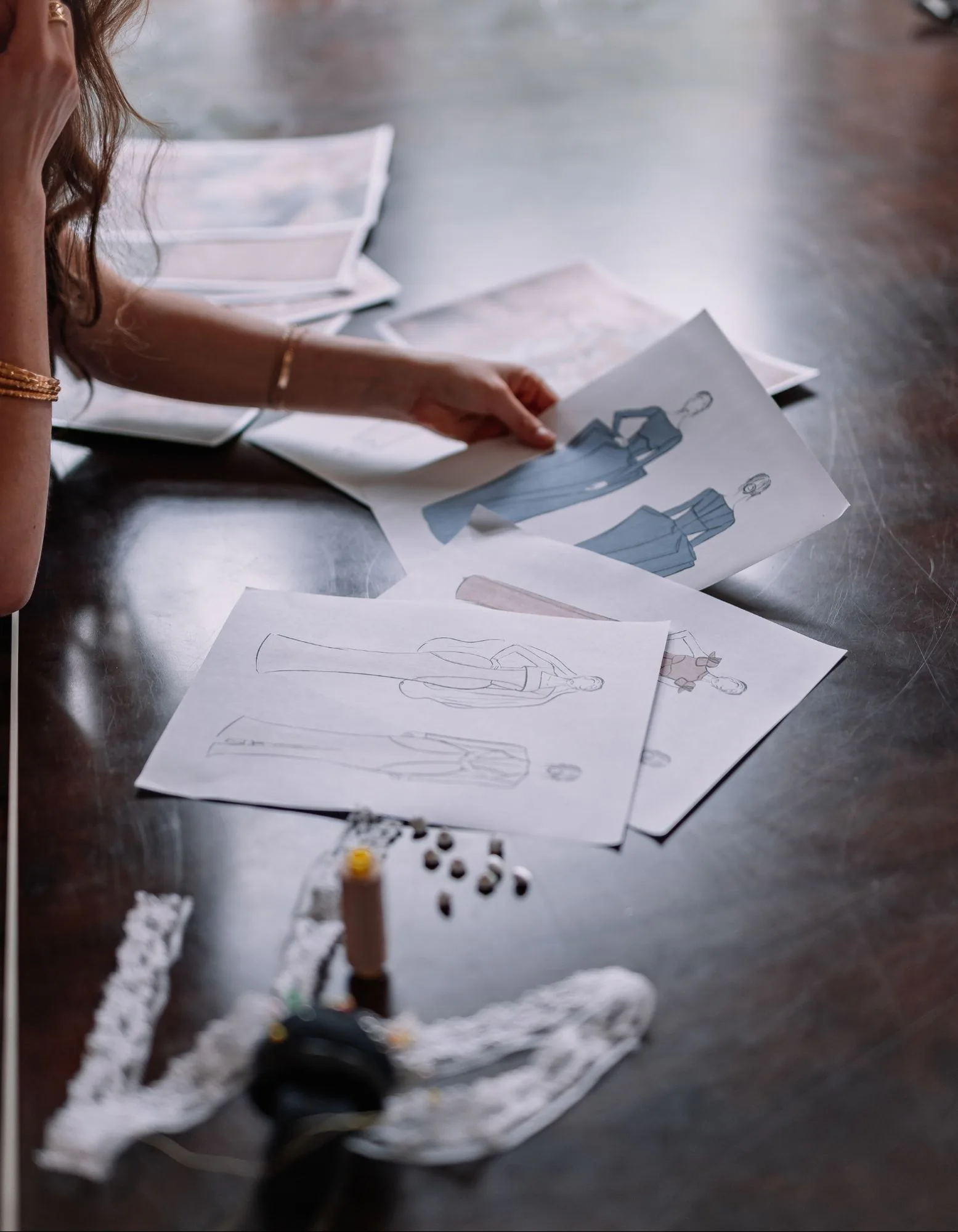
Coverage is strongest when neckline, sleeve, and silhouette are sketched as one complete idea. Image: Samantha Covey.
Silhouettes that work well in cathedrals
Cathedral-ready does not mean one shape. It means choosing a shape that can carry formality, coverage, and movement.
A-line gowns are one of the easiest choices. They balance modest necklines and sleeves without feeling heavy, and they work with chapel or cathedral trains. They also photograph well from the back, which matters during a long processional.
Ballgowns are the most traditional cathedral choice. They hold scale in a large church and make a clear entrance. The risk is weight. If you choose a ballgown, talk through sitting, kneeling, stairs, bustle points, and how the skirt will move through the aisle.
Column gowns can be stunning in a cathedral when the top is strong. A sculpted bateau neckline, long fitted sleeves, a Watteau cape, or a cathedral veil can give a narrow dress enough presence for the space.
Basque-waist and drop-waist gowns can feel old-world without feeling costume-like. They work especially well when paired with a full skirt, covered buttons, and refined fabric.
Cape gowns are useful when a bride wants ceremony coverage and reception flexibility. A cape can cover shoulders, soften the back, create a train effect, and then come off later.
Boleros, jackets, and toppers are best when they are designed with the gown. A separate cover can be beautiful, but only if the neckline, waist, sleeve, and fabric all relate to the dress underneath.

A cleaner gown can still hold a formal setting when the shape, fabric, and finishing have enough presence. Image: Samantha Covey.
Train length: chapel, cathedral, or something smarter
The word "cathedral" can be confusing because it can mean the building, the style of wedding, or the length of a train or veil.
According to The Knot's train guide, chapel trains usually extend about 3 to 4 feet from the waist, while cathedral trains often extend about 6 to 8 feet. A cathedral train is formal, dramatic, and beautiful in a large church. It also needs management.
Think about the aisle first. A long train needs room to spread. If the aisle is narrow or the wedding party is large, a huge train may bunch, twist, or get stepped on. Ask the church if attendants can arrange the train before the bride walks and after she reaches the altar.
A chapel train may be the better choice if you want elegance without constant fuss. A semi-cathedral train can also be a good middle ground. You get the sense of ceremony without the full weight and length.
You should also decide how the train works after the ceremony:
- Will it bustle securely for the reception?
- Does the fabric hold bustle points well?
- Will lace placement make bustle points visible?
- Can the train be detachable?
- Will the veil provide the ceremony drama instead of the dress train?
- Who is assigned to help before portraits and after the recessional?
If a bride wants a very clean dress, a cathedral-length veil can create the entrance without committing to a heavy dress train all night.
Veils, mantillas, and ceremony layers
A veil can change the whole feeling of a Catholic cathedral wedding dress. It frames the face, softens the silhouette, and adds movement through the aisle.
Brides' veil length guide describes cathedral-length veils as the most dramatic down-the-aisle length, extending beyond the train of the gown. That can be exactly right for a cathedral ceremony.
A cathedral veil works especially well when:
- The gown itself is simpler.
- The church aisle is long enough to show the length.
- You want drama for the ceremony but less weight on the dress.
- You have someone assigned to arrange it before the processional.
- The lace, trim, or edge detail matches the gown instead of competing with it.
A mantilla veil is another beautiful option, especially for brides who want a more traditional Catholic or Spanish-inspired feeling. Brides' mantilla guide describes mantillas as circular veils with lace trim around the edge, often worn so the lace frames the face and shoulders.
For a cathedral wedding, a mantilla can be practical as well as beautiful. It can soften shoulder coverage, create reverence, and bring detail close to the face. Just confirm with your hair stylist how it will attach and whether you want it worn high, flat, or slightly back from the hairline.
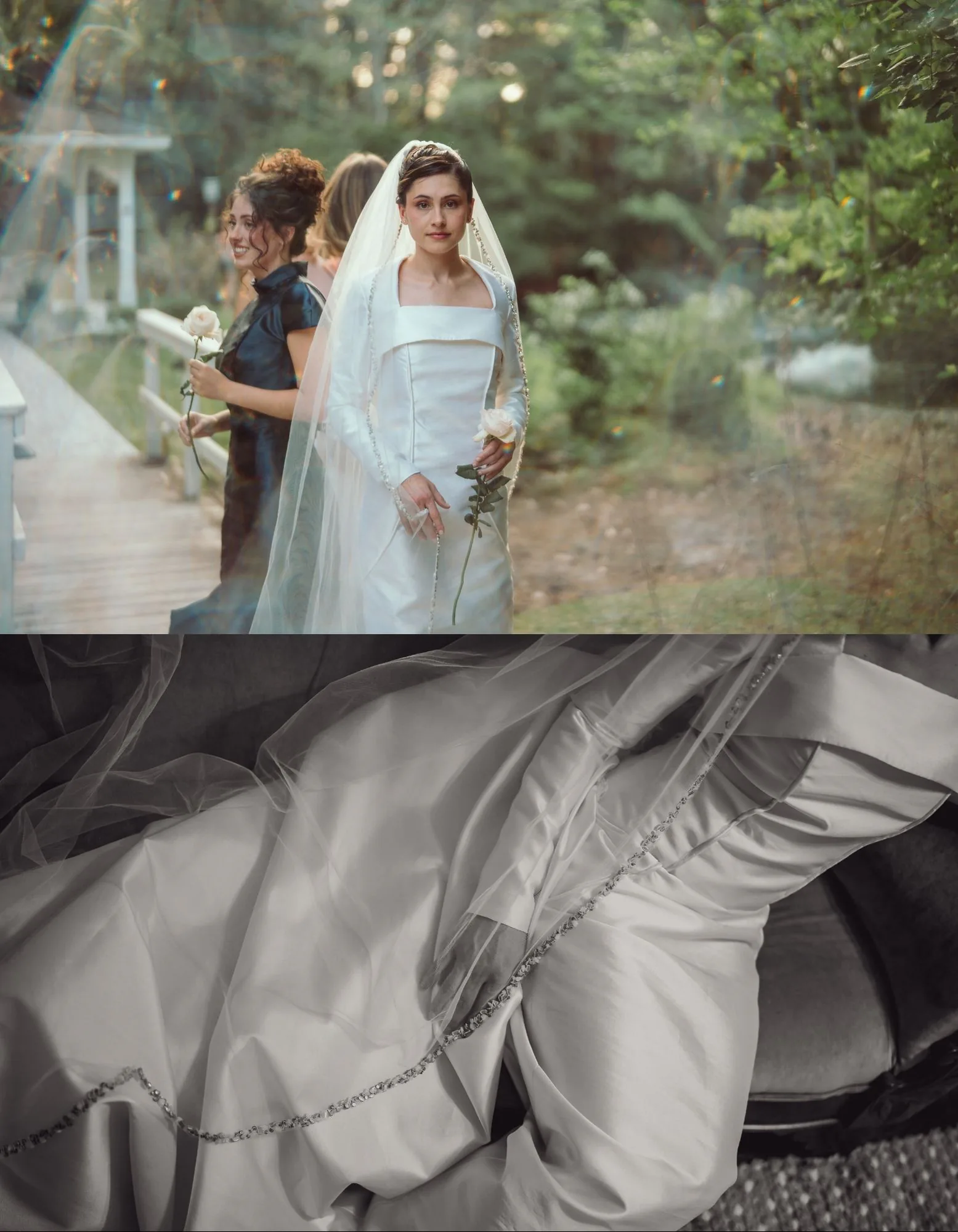
A veil can carry much of the cathedral drama while keeping the gown itself easier to wear. Image: Samantha Covey.
Fabrics that feel right in a cathedral
Fabric is where modest bridal can become truly elegant. Coverage alone is not enough. The fabric has to hold shape, respond to light, and support the formality of the church.
Silk mikado is structured, luminous, and formal. It is excellent for clean ballgowns, basque waists, architectural necklines, and skirts that need body.
Matte crepe is quieter and more modern. It works well for column gowns, fitted sleeves, clean bateau necklines, and minimal dresses that need beautiful fit more than embellishment.
Satin gives a classic bridal glow. It can feel traditional or sleek depending on the cut. Heavier satins are usually better for cathedral settings than very thin satin that clings or wrinkles easily.
Organza brings volume without the same weight as heavy satin or mikado. It is good for overskirts, sleeves, and layers that need lightness.
Tulle is soft and romantic, but it needs a plan. A cathedral space can swallow very fine tulle if there is not enough structure or detail. Layered tulle, embroidered tulle, or tulle paired with lace can hold the room better.
Lace can be traditional, modern, or sculptural. The key is scale. Tiny lace may disappear in a large church. Larger motifs, lace borders, or carefully placed appliques often photograph better.
Illusion fabric can soften sleeves, necklines, and backs, but if modesty is part of the requirement, decide what should be lined. Skin-tone illusion is not the same as coverage.
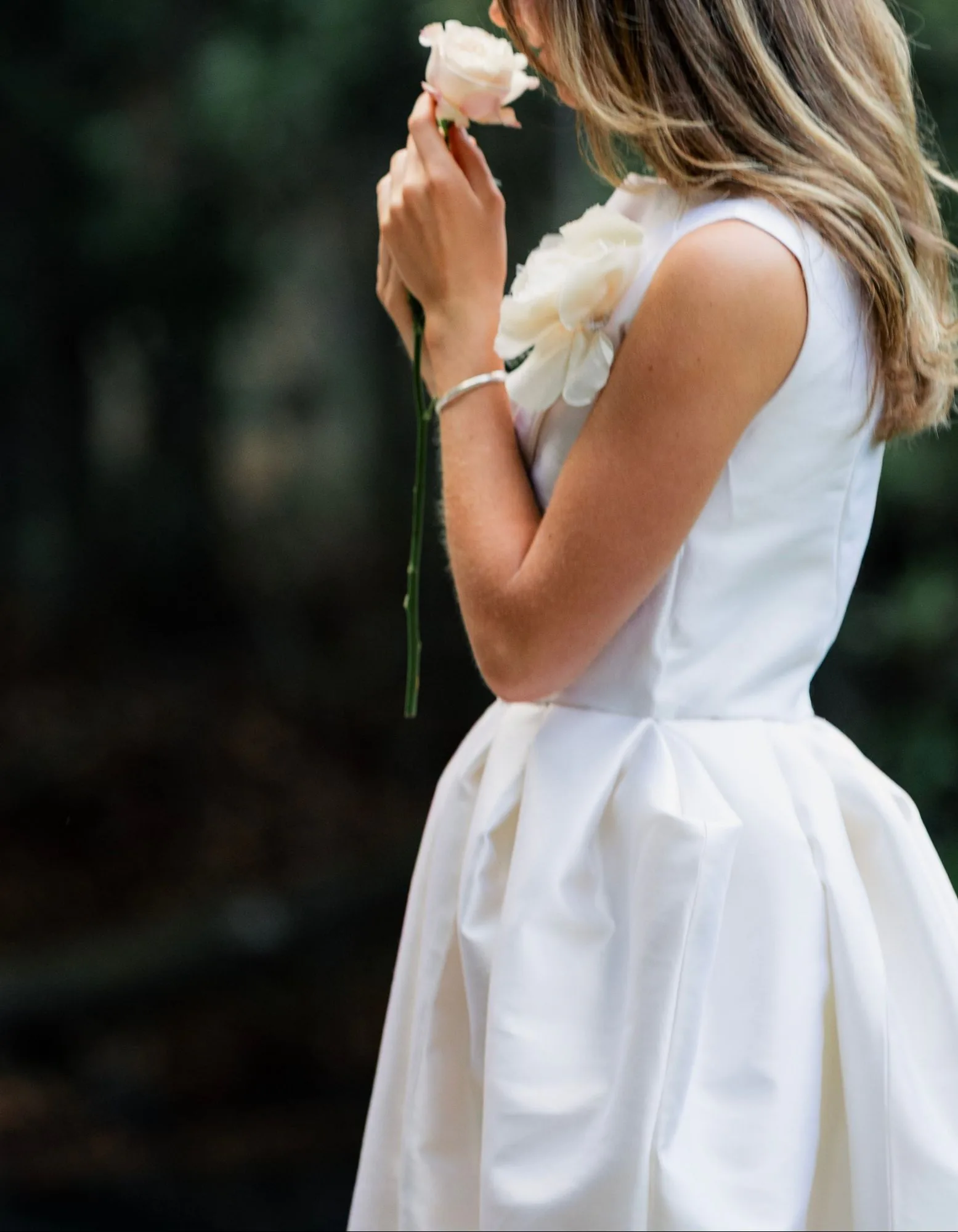
Small details matter, but in a large sacred space the overall line still has to read clearly. Image: Samantha Covey.
The fit test most brides forget
A cathedral-ready dress needs a movement test. Not a quick mirror turn. A real one.
At fittings, practice the things you will actually do:
- Walk slowly with a bouquet.
- Turn without stepping on the hem.
- Sit in a pew-like position.
- Kneel if your ceremony may include kneeling.
- Raise your arms enough to hug.
- Hold hands at the altar.
- Walk up and down a few steps if the church has them.
- Test the bustle more than once.
- Try the veil with the dress, not separately.
- Have someone arrange the train and time how long it takes.
This is not fussy. It is practical. A dress that cannot move through the ceremony will distract you at the exact moment you want to be most present.
How to balance tradition and modern style
Many brides worry that a Catholic cathedral dress has to be stiff or predictable. It does not.
You can be traditional: long lace sleeves, covered buttons, full skirt, cathedral veil, and a defined waist.
You can be modern: matte crepe, clean neckline, sculptural sleeve, minimal train, and an architectural cape.
You can be romantic: soft tulle, embroidered lace, floral appliques, sheer-but-lined sleeves, and a mantilla veil.
You can be dramatic: mikado ballgown, basque waist, cathedral train, and a veil that fills the aisle.
The style can change. The standard should not. In a Catholic cathedral, the dress should feel respectful, intentional, and secure.

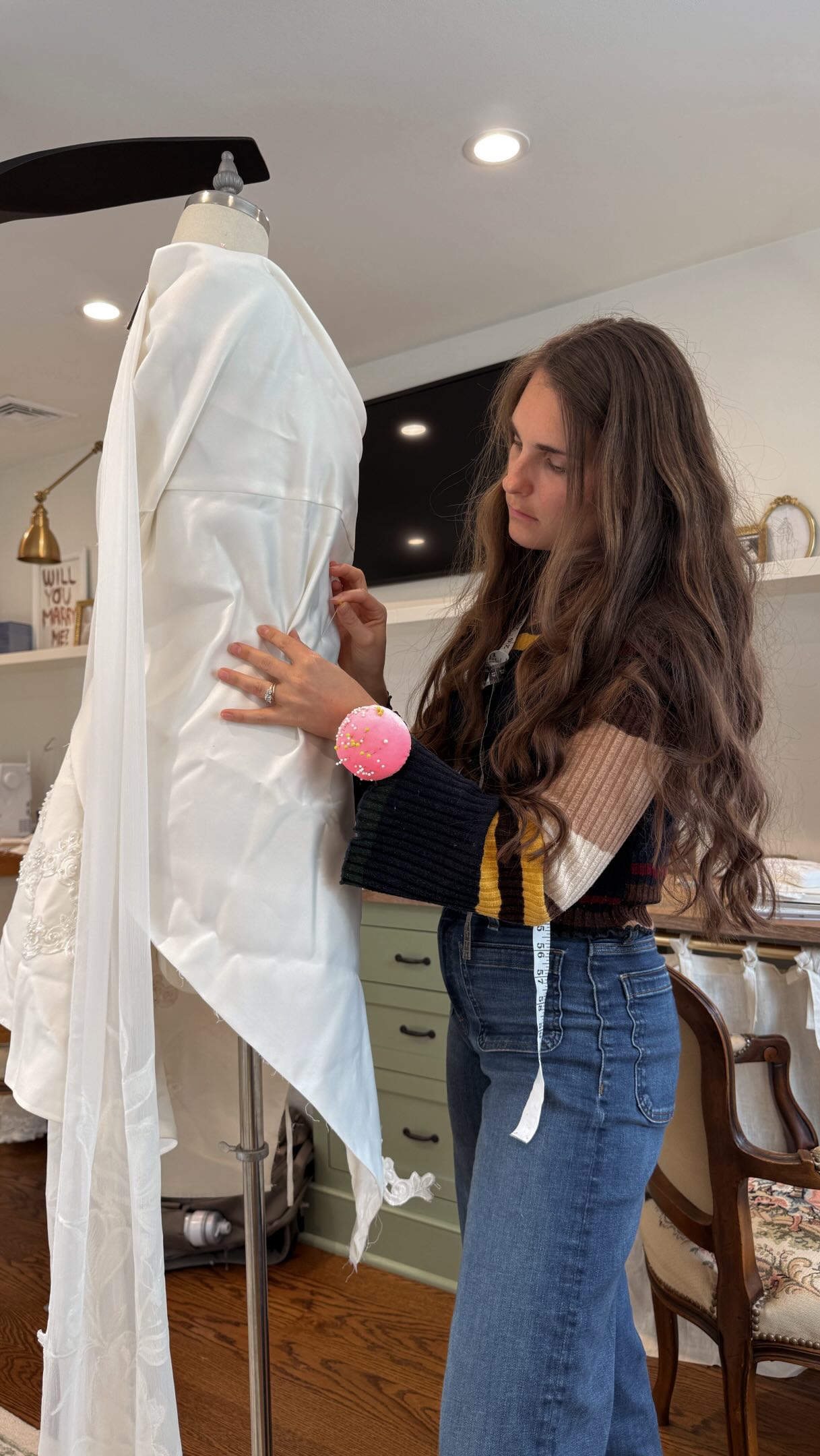
Samantha Covey designs custom bridal and eveningwear with the coverage, construction, and ceremony needs planned from the beginning. Image: Samantha Covey.
Where custom design helps most
Custom design is not only for brides who want something unusual. It is also for brides whose needs are too specific for a standard boutique dress.
For a Catholic cathedral wedding, custom helps because the rules and preferences can be built into the gown from the first sketch. You are not asking an alterations specialist to solve neckline, sleeve, back, lining, train, and veil questions after the fact.
With Samantha Covey, the dress can begin with the real brief:
- The cathedral or parish guidelines.
- Your personal modesty standards.
- The formality of the ceremony.
- The season and temperature.
- Whether you are having a Nuptial Mass or a wedding ceremony outside Mass.
- Whether you want one look all day or ceremony and reception changes.
- Your comfort with sleeves, high necklines, veils, capes, or detachable pieces.
- The way you want to feel when you walk into the church.
That matters because modest bridal is not just adding fabric. It is proportion, patternmaking, fit, fabric, and restraint. The dress should look like it was always meant to be this way.
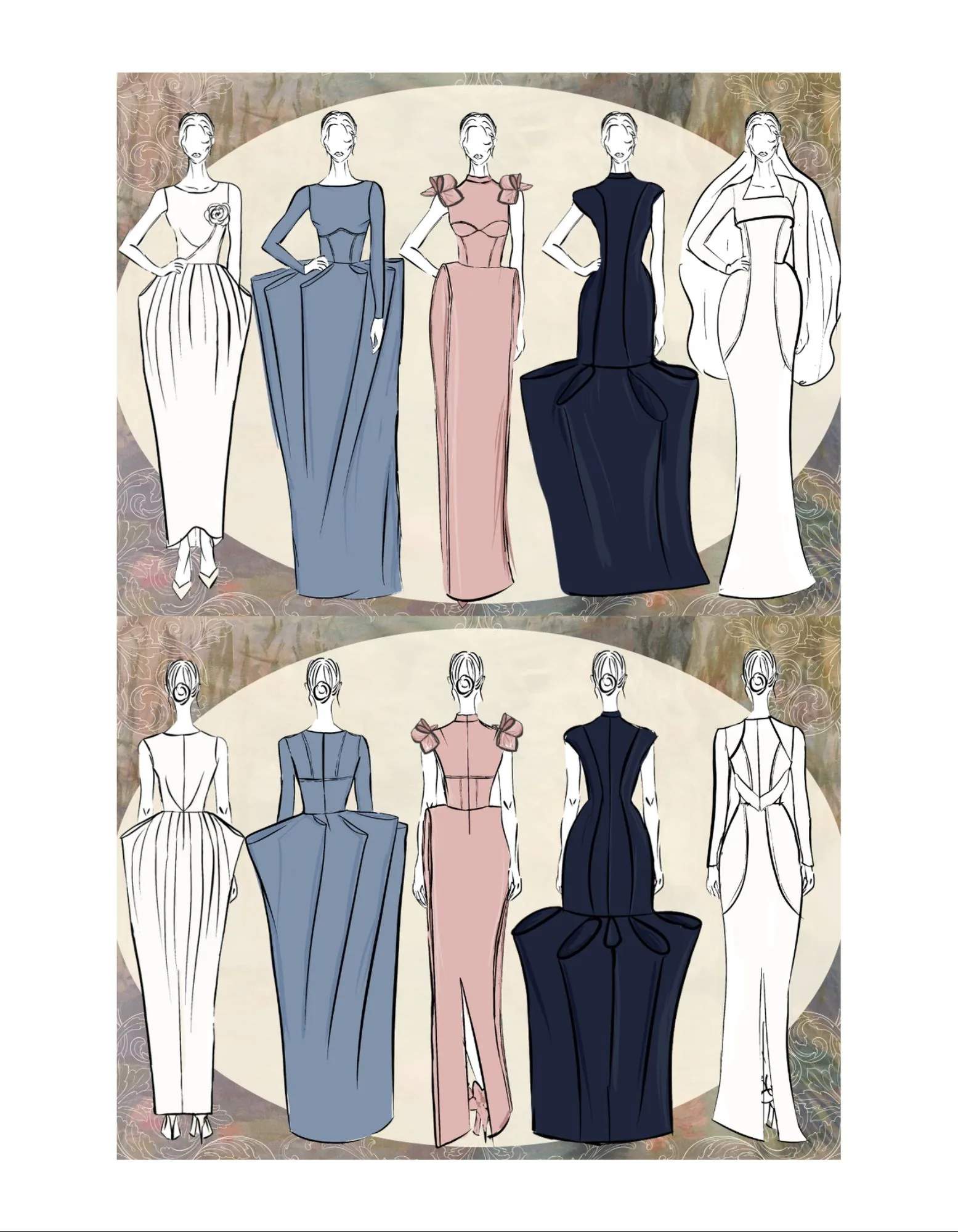
Bring the ceremony rules, inspiration images, and coverage notes early so the gown can be designed as one complete idea. Image: Samantha Covey.
What to bring to your designer
If you are planning a Catholic cathedral wedding, bring more than dress screenshots to your first design conversation.
Bring:
- The cathedral or parish wedding guidelines.
- A note from the coordinator if there are specific attire requirements.
- Photos of the church aisle, altar, steps, and entrance if available.
- Your ceremony format and date.
- Your modesty must-haves and nice-to-haves.
- Examples of sleeves, necklines, backs, veils, and fabrics you like.
- Any family or cultural traditions, such as a mantilla veil.
- Notes about reception changes, dancing, climate, and travel.
- Your budget range and ideal timeline.
The clearer the brief, the better the design can become.
A simple cathedral-ready checklist
Use this before you commit to a gown:
- The dress meets the church's actual rules.
- The shoulders, neckline, back, and slit are ceremony-appropriate.
- Sheer lace or illusion is lined where it needs to be lined.
- The sleeve allows comfortable movement.
- The train fits the aisle and has a bustle plan.
- The veil works with the gown, hair, and church scale.
- The fabric has enough structure for the space.
- The gown can handle sitting, kneeling, hugging, stairs, and portraits.
- Any removable layer looks designed, not improvised.
- You feel like a bride, not like you are wearing a compromise.
The best dress feels settled
A cathedral-ready wedding dress does not have to shout. It does not have to copy anyone else's idea of a Catholic bride. It simply has to feel settled: right for the sacrament, right for the room, and right for the woman wearing it.
If you want a custom gown that begins with those needs instead of treating them as problems to fix later, request an appointment with Samantha Covey. Bring the cathedral rules, your inspiration, and the details that matter most. The dress can be reverent, beautiful, personal, and fully yours.
Sources and further reading
Continue exploring
More from the blog

Peter Copping mentorship
A Lanvin-inspired eveningwear look developed through Peter Copping's SCAD mentorship, selected for the SCAD Fashion Show and featured by Vogue Runway.
I graduated from SCAD
A personal note from Samantha on graduating from SCAD with a B.F.A. in Fashion Design and a minor in Bridal and Eveningwear.
Top 10 custom bridal companies for modest wedding dresses
A short, practical guide to U.S. bridal companies that understand modest wedding dresses, custom design, and thoughtful coverage.